Crash Games Strategy: Bankroll Management for Aviator & Beyond
Crash games have revolutionized the online gaming landscape, offering players a unique blend of simplicity and strategic depth that traditional casino games cannot match. Spribe’s portfolio, featuring titles like Aviator and Pilot Chicken, has become the gold standard for multiplier-based gameplay across the international market. However, the volatile nature of these games demands a sophisticated approach to bankroll management that goes far beyond casual betting. This comprehensive guide explores the critical strategies that separate successful crash game players from those who deplete their funds rapidly, focusing on risk management principles and betting discipline that apply across all major crash game titles.
Understanding Crash Game Volatility and Its Impact on Bankroll Strategy
Crash games operate on a fundamentally different principle than traditional slot machines or table games. In Aviator, players watch an aircraft ascending across the screen, with a multiplier increasing from 1.00x upward. The challenge lies in predicting when the plane will crash and cashing out before that moment. This creates an inherent volatility that requires bankroll management strategies specifically tailored to the format.
The multiplier mechanic in Pilot Chicken and similar Spribe titles introduces unpredictability that can swing dramatically within seconds. One round might crash at 1.15x, while the next reaches 50x or beyond. This variance means that traditional bankroll management approaches used for games with fixed return-to-player percentages prove insufficient. Players must account for the psychological pressure of watching multipliers climb and the temptation to extend bets beyond predetermined limits.
Understanding house edge in crash games differs from conventional casino mathematics. While these games typically operate with a mathematical advantage favoring the platform, the player’s ability to control exit points introduces a skill component that influences outcomes. This makes bankroll management not just about preserving capital, but about optimizing decision-making under pressure.
The Foundation: Establishing Your Crash Game Bankroll

Determining Your Total Gaming Capital
Before placing a single bet on Aviator or any crash game, players must establish a total bankroll they can afford to lose without impacting their financial obligations. This amount should represent money that is genuinely disposable, separate from rent, utilities, savings, and emergency funds. The international gaming community has increasingly recognized that bankroll establishment is the cornerstone of sustainable play.
Many experienced crash game players recommend allocating between one and three percent of monthly disposable income as their total crash game bankroll. For someone with limited disposable income, this might mean starting with modest amounts, while players with greater financial flexibility can allocate larger sums. The critical factor is that this decision remains rational and predetermined, not made during an active gaming session when emotions run high.
Segmenting Your Bankroll Into Sessions
Once you establish your total bankroll, the next essential step involves dividing it into session amounts. Most professional crash game players segment their bankroll into ten to twenty equal portions, with each portion representing the maximum they will risk during a single gaming session. This approach prevents catastrophic losses from depleting an entire bankroll in one sitting.
For example, a player with a monthly crash game bankroll of one hundred units might divide this into fifteen sessions of approximately six to seven units each. This segmentation creates natural stopping points and prevents the common pattern of chasing losses that leads to accelerated bankroll depletion. Session-based bankroll management has proven particularly effective for Aviator players who face the psychological challenge of watching multipliers climb.
Bet Sizing Strategy for Multiplier-Based Games
The Percentage-Based Betting Approach
Once you establish a session bankroll, the next critical decision involves determining individual bet sizes. The percentage-based approach, where each bet represents a fixed percentage of your remaining session bankroll, provides a mathematically sound framework for crash game betting. Most experienced players recommend betting between one and five percent of their session bankroll on each round.
This approach offers several advantages specific to crash game dynamics. As your session bankroll fluctuates through wins and losses, your bet sizes automatically adjust, preventing the dangerous escalation that occurs when players maintain fixed bet amounts regardless of their current financial position. In Pilot Chicken and similar titles where variance can be extreme, this adaptive approach protects against the devastating impact of losing streaks.
The percentage-based method also addresses the psychological challenge unique to crash games. When players watch a multiplier climb to ten times, twenty times, or beyond, the temptation to increase subsequent bets intensifies dramatically. Maintaining a consistent percentage prevents this emotional escalation from destroying carefully planned bankroll management.
The Kelly Criterion Modified for Crash Games
Advanced players often employ a modified version of the Kelly Criterion, a mathematical formula traditionally used in sports betting and portfolio management. The classical Kelly Criterion suggests betting a fraction of your bankroll based on your edge and odds. However, crash games require adaptation since players influence their outcomes through cash-out decisions.
The modified approach involves calculating an optimal bet size based on your historical win rate and average multiplier achieved before crashing. Players who maintain detailed records of their Aviator sessions can analyze their actual performance data to determine an appropriate Kelly fraction. Most crash game professionals recommend using one-quarter to one-half of the classical Kelly percentage to account for the unique volatility of these games.
Risk Management Principles Across Spribe’s Crash Portfolio
Effective risk management in crash games extends beyond simple bet sizing. Players must establish predetermined rules that govern their behavior during sessions, particularly when facing winning or losing streaks. The most successful international crash game players maintain written guidelines they follow regardless of emotional state.
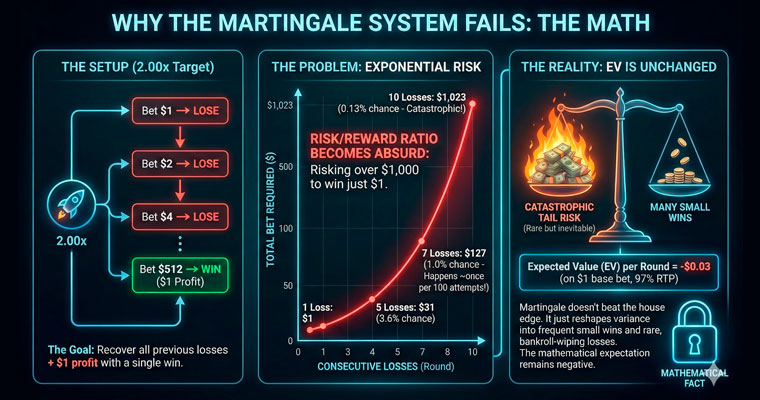
One fundamental principle involves establishing both daily and session loss limits. If a player reaches their predetermined session loss limit, they stop playing immediately, regardless of how tempting upcoming opportunities appear. Similarly, many players establish daily loss limits that trigger a complete cessation of crash game activity, preventing the common pattern of chasing losses across multiple sessions.
Winning streaks present equally important risk management challenges. The psychological phenomenon of feeling invincible after consecutive wins leads many players to increase bet sizes dramatically, ultimately surrendering profits. Professional crash game players establish profit targets for each session and stop playing once they achieve these targets, protecting gains from the volatility inherent in multiplier-based games.
Psychological Discipline and Behavioral Strategies
Bankroll management ultimately depends on behavioral discipline, the ability to follow predetermined rules even when emotional impulses suggest otherwise. Crash games like Aviator create intense psychological pressure through their real-time multiplier displays and rapid-fire decision-making requirements. Players must develop strategies that counteract these psychological pressures.
Many experienced players employ the technique of pre-committing to cash-out multipliers before each round begins. Rather than watching the multiplier climb and deciding when to exit, they establish their target in advance and execute that decision mechanically. This approach removes emotion from the decision-making process and prevents the dangerous tendency to hold positions hoping for higher multipliers.
Taking regular breaks represents another critical behavioral strategy. The intensity of watching multipliers climb in real-time creates cognitive fatigue that impairs decision-making. Players who maintain discipline by taking breaks every twenty to thirty minutes demonstrate superior long-term results compared to those who play continuously. These breaks allow for rational reflection on session performance and prevent the escalation that occurs during extended play sessions.
Tracking Performance and Adjusting Strategy
Successful bankroll management requires ongoing analysis and adjustment based on actual performance data. Players should maintain detailed records of every crash game session, documenting their bets, cash-out multipliers, results, and emotional state during play. This data provides objective feedback about whether current strategies are working effectively.
By analyzing historical data from Aviator and Pilot Chicken sessions, players identify patterns in their decision-making and outcomes. Some players discover they consistently cash out too early, missing profitable multipliers, while others hold positions too long and experience frequent losses. This self-knowledge enables strategic adjustments that improve long-term results. Players might discover that their optimal cash-out strategy differs from their initial assumptions, requiring modifications to their approach.
Regular performance reviews every ten to twenty sessions allow players to assess whether their bankroll management strategy is sustainable. If a player consistently depletes their session bankroll within a few rounds, this indicates that bet sizing is too aggressive relative to their skill level and the game’s volatility. Conversely, if a player finds themselves with substantial remaining session bankroll after completing many rounds, they might optimize returns through slightly increased bet sizes.
Remember that crash games carry inherent risks, and no strategy guarantees profits. Play only with money you can afford to lose, set strict limits on your spending, and seek help if you develop problematic gambling habits. Responsible gaming organizations provide support for individuals struggling with gambling-related issues, and many reputable platforms offer self-exclusion tools and deposit limits to help players maintain control over their gaming activities.
